Unpaid invoice follow-up
The system reads overdue invoices, sends a polite reminder after 7 days, a second after 14, then flags the owner if nothing moves.
- Reminders staged over time
- Custom tone and timing
- Full send log
Work
We'd rather show one project in detail than a wall of borrowed logos. Here is FoodLink Operations, a system in service, and the automations we know how to build.
An application that turns food-donation offers written by hand in an email into scheduled pickups and messages ready to send.
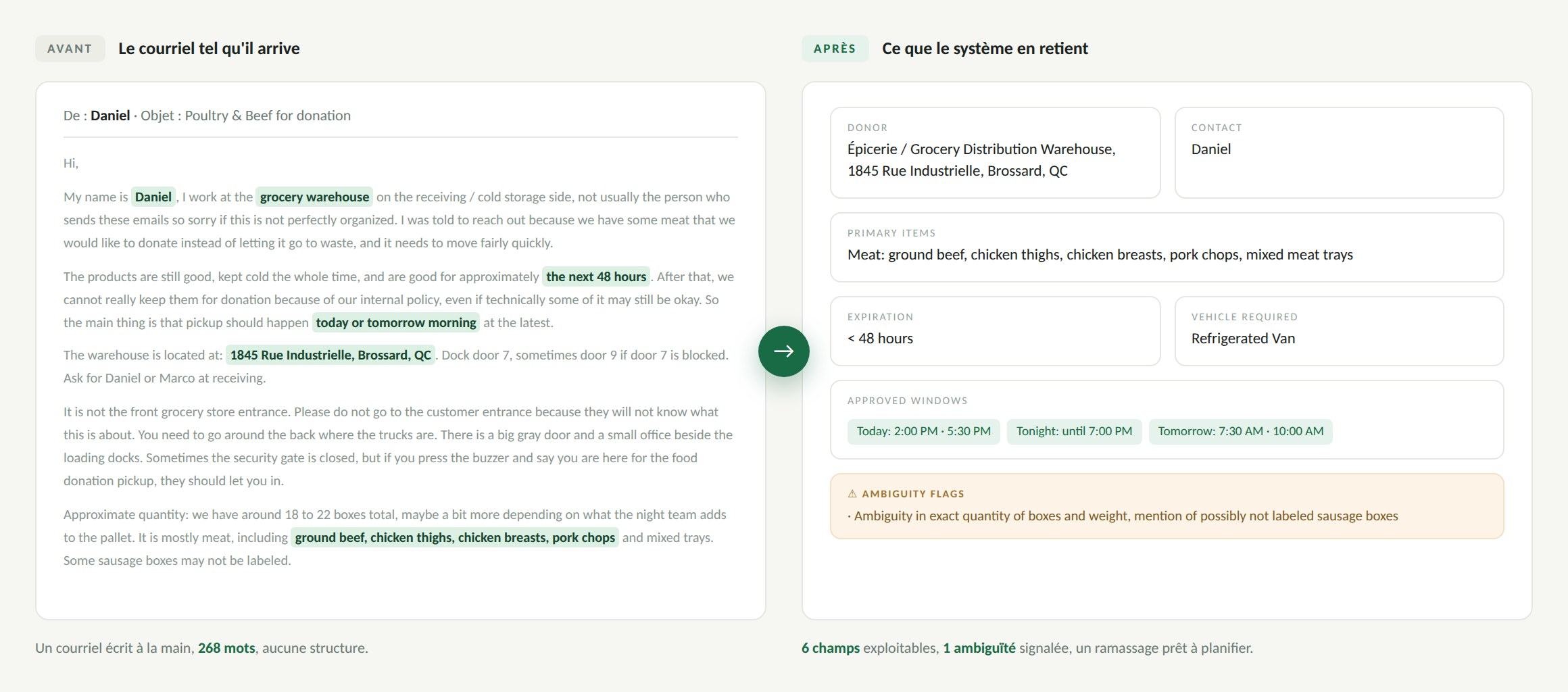
Donations arrive like any other email: a warehouse employee quickly writes down what is available, gives an approximate quantity, drops three possible pickup windows in the middle of a paragraph, mentions which dock to use and reminds everyone the goods must move fast. Every message had to be read, interpreted and retyped before a pickup could be organised.
An agent chain that handles the message end to end: reading the email, extracting logistics data, checking fleet availability, applying business rules, routing to agencies, generating the communications, then assessing risk.
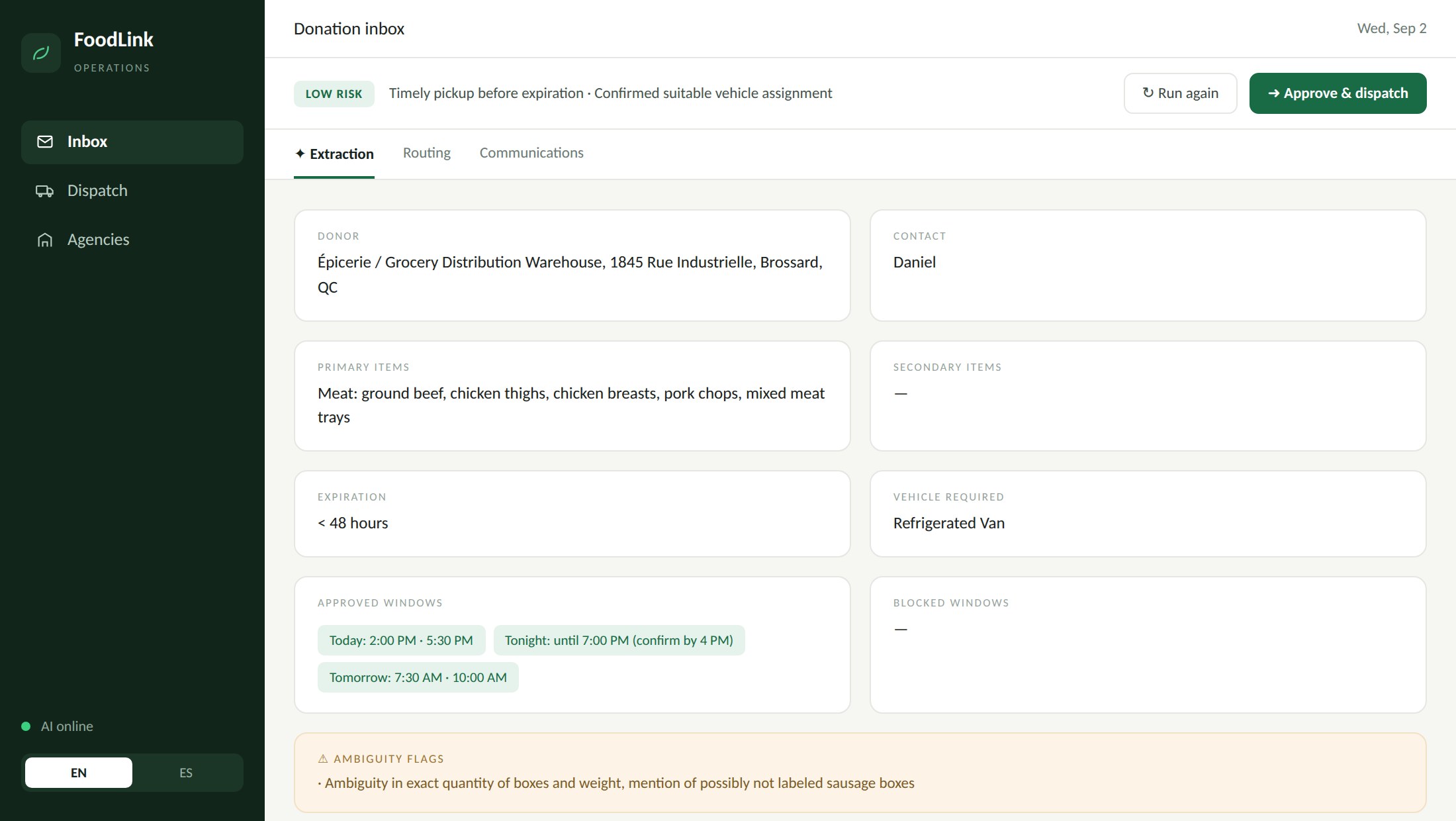
A structured record — donor, contact, items, expiration, vehicle required, approved and blocked pickup windows — together with the dispatch plan, the reason behind the vehicle choice and the two messages to send.
Technical details of the project are shared on request.
Before / after
On the left, the email as it arrived: 268 hand-written words, apologies, directions to the right loading dock, an approximate quantity. On the right, what the system keeps — only what is needed to schedule the pickup — and the ambiguity it refuses to settle on its own.
The screens
Logistics fields pulled from a hand-written email, with ambiguities flagged rather than guessed.
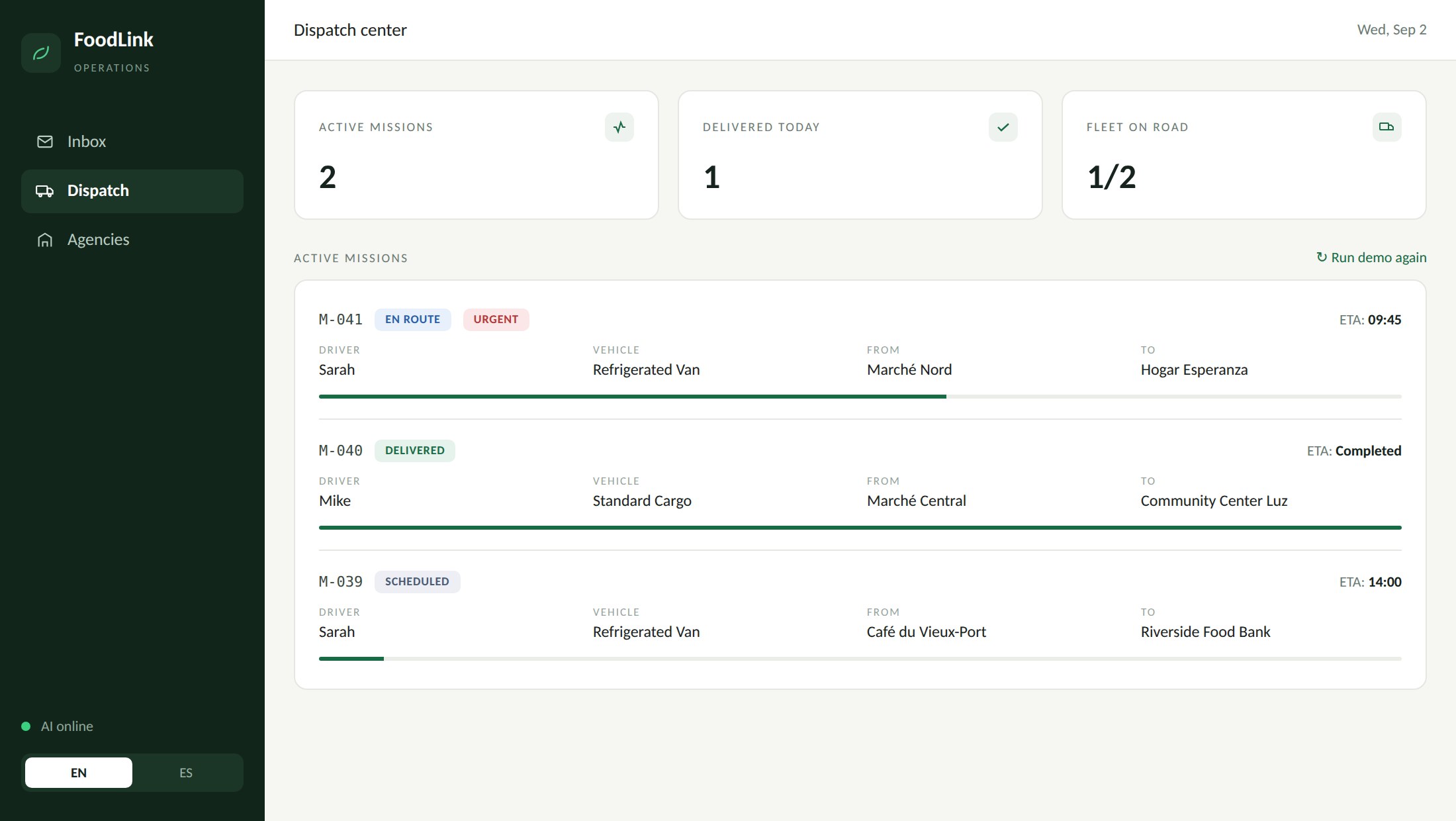
Active missions, deliveries of the day and fleet on the road, updated continuously.
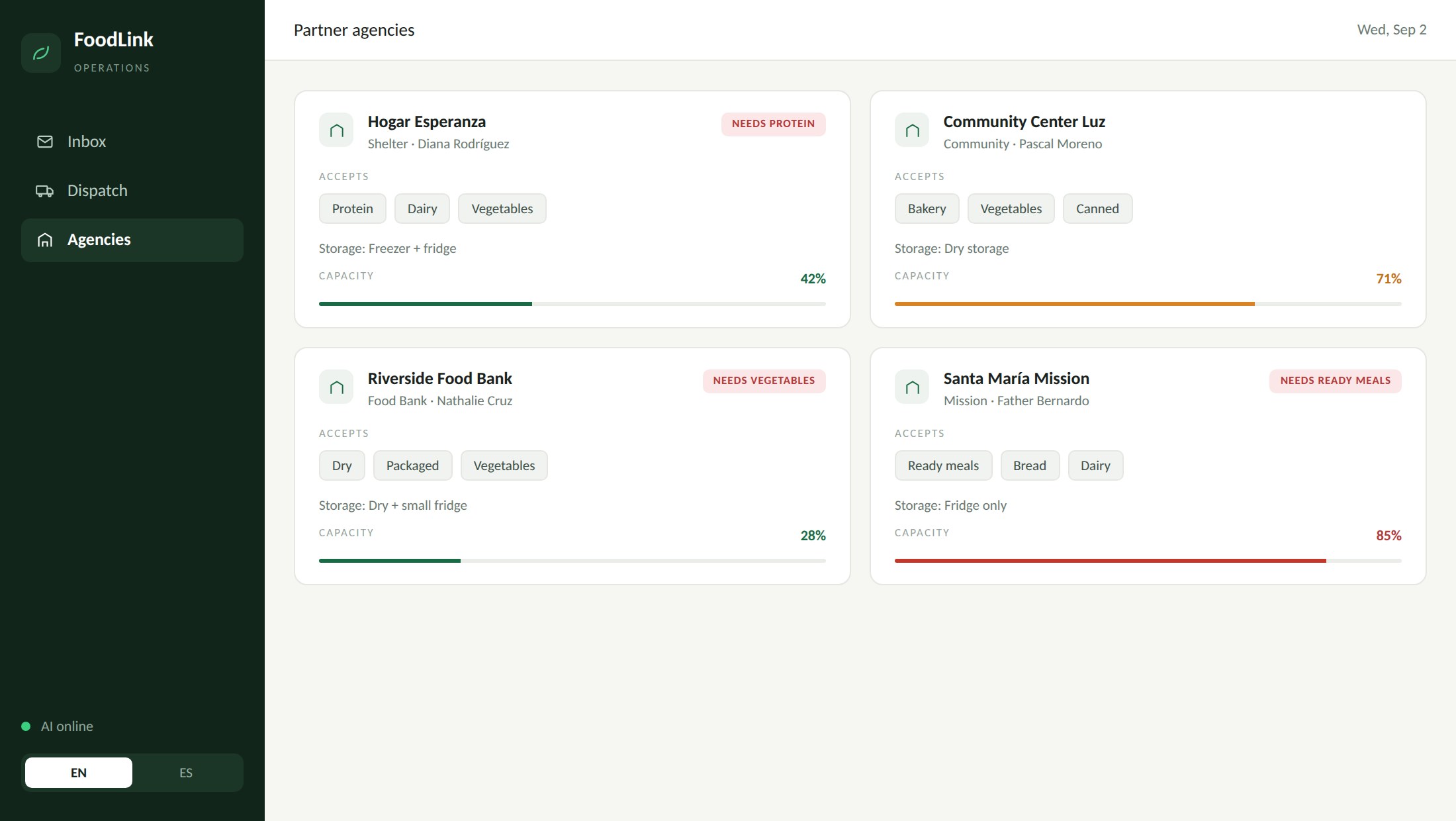
What each agency accepts, its storage type and remaining capacity: that is what drives the routing.
The detail that matters
When a quantity is vague or a box is unlabelled, the information isn't guessed: it is marked as ambiguous and sent back to a human. On an email that isn't a donation offer at all, the record stays empty and the message is rated high risk, with the reason. That's the rule everywhere: an automation that invents data costs more than the manual work it replaces.
The system reads overdue invoices, sends a polite reminder after 7 days, a second after 14, then flags the owner if nothing moves.
Every quote sent is tracked: follow-up at the right time, replies recorded, prospects sorted by interest.
The week's numbers are gathered, formatted and delivered to your inbox Monday morning, always the same way.
PDFs arriving by email are read, checked and filed into accounting with the right fields.
Confirmation at booking, reminder the day before, follow-up if the client doesn't show.
What technicians fill in on site arrives at the office ready to invoice.
We collect the details, study the feasibility on our side, then come back with a clear answer: what can be automated, what can't, and why.